
Keeping plants properly watered is one of the most important parts of successful gardening. However, regular watering can sometimes be difficult, especially for people with busy schedules, indoor plants that need consistent moisture, or plants growing in warm and dry environments.
A self-watering pot offers a practical solution by incorporating a water reservoir and a system that helps supply moisture to the plant over time. Instead of relying entirely on frequent surface watering, the planter is designed to make water management more convenient.
From indoor plants and herbs to balcony gardens and commercial plant displays, self-watering planters can be useful in many different growing environments.
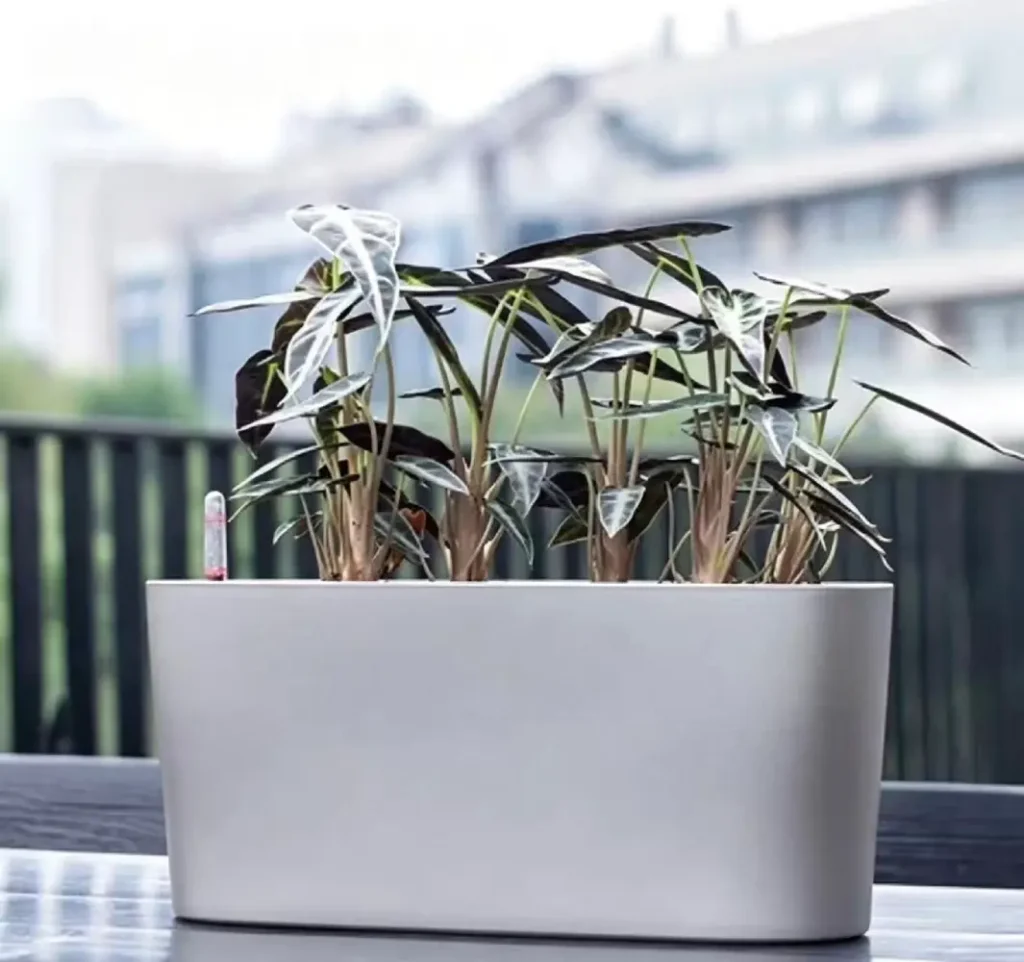
What Is a Self-Watering Pot?
A self-watering pot is a planter designed with a built-in water reservoir and a system that allows plants to access stored water as needed.
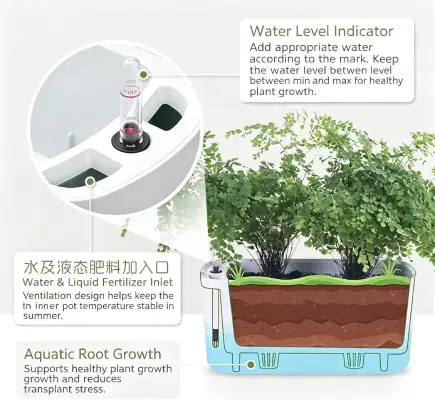
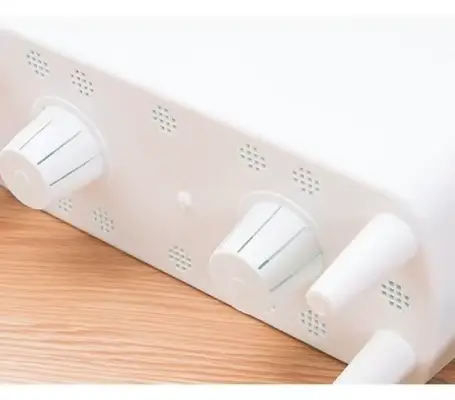
Unlike a conventional flower pot, where water is normally added directly to the growing medium, a self-watering planter separates the water storage area from the main planting area. Depending on the design, water can move from the reservoir toward the root area through a wick, capillary system or another internal structure.
The goal is simple: make plant watering more convenient and help maintain a more consistent moisture supply.
Self-watering pots come in many different shapes and sizes, including round pots, rectangular planters and larger containers for indoor or outdoor planting.
How Does a Self-Watering Pot Work?
The basic principle behind a self-watering pot is water storage and controlled moisture supply.
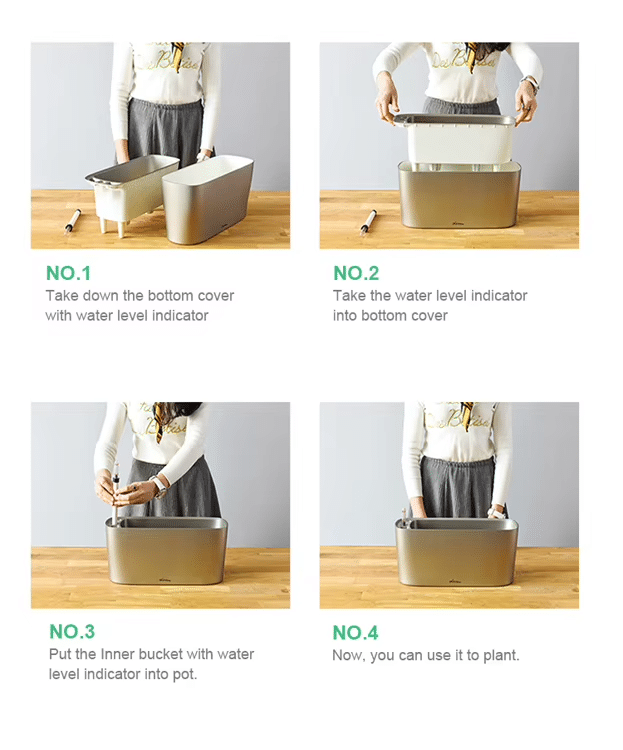
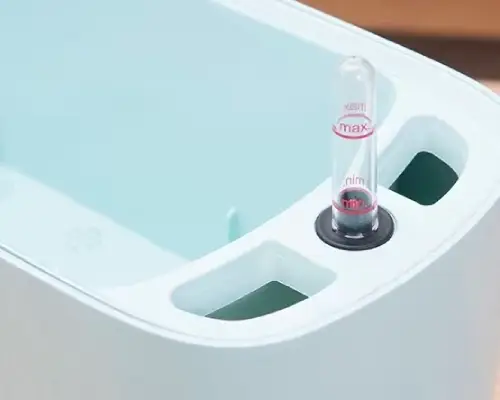
Simply install the water level indicator, place the inner bucket into the planter and add water to the reservoir. The self-watering system then provides a convenient water supply for your plants.
Benefits of Using Self-Watering Pots
More Convenient Plant Care
One of the biggest advantages of a self-watering planter is convenience. The water reservoir provides additional water storage, so users do not necessarily need to water their plants every day.
This can be particularly useful for indoor plants, office greenery and home gardens.
More Consistent Moisture Supply
Traditional watering can sometimes create large differences in moisture levels. The growing medium may become very wet immediately after watering and gradually become dry later.
A well-designed self-watering system can help provide a more consistent supply of moisture around the root area.
Useful for Busy Plant Owners
For people who travel, work long hours or simply do not have time for frequent plant care, self-watering pots can make routine gardening easier.
They are not a replacement for proper plant care, but they can reduce the frequency of manual watering.
Suitable for Indoor Gardening
Self-watering planters are particularly useful for indoor plants because indoor growing environments can make regular watering easy to overlook.
They can be used in living rooms, kitchens, offices, reception areas and other indoor spaces.
Flexible for Different Growing Spaces
Self-watering pots are available in different shapes, sizes and styles. Rectangular planters, for example, can work well on windowsills, balconies, tables and other areas where space is limited.
Which Plants Are Suitable for Self-Watering Pots?
Self-watering pots are suitable for many plants that prefer a consistent moisture supply, including herbs, flowers, foliage plants and small ornamental plants. They are especially convenient for plants grown indoors or in spaces where regular watering may not always be possible. However, plants with low water requirements should be monitored carefully to avoid excessive moisture.
Self-Watering Pots for Indoor and Outdoor Gardening
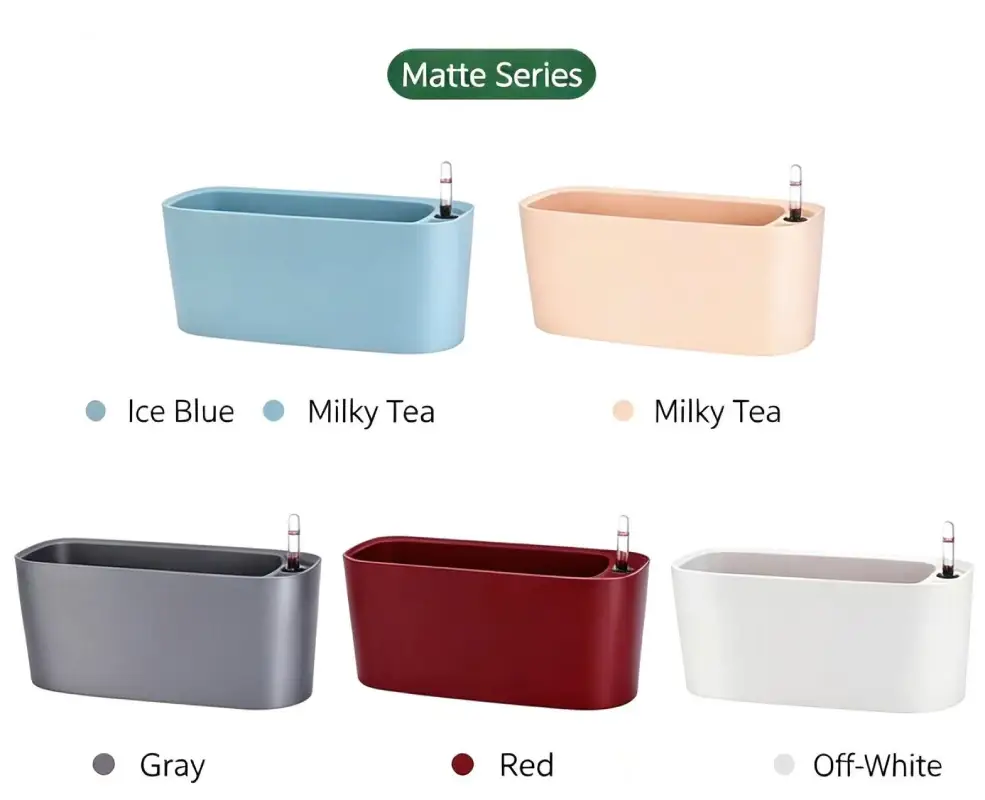
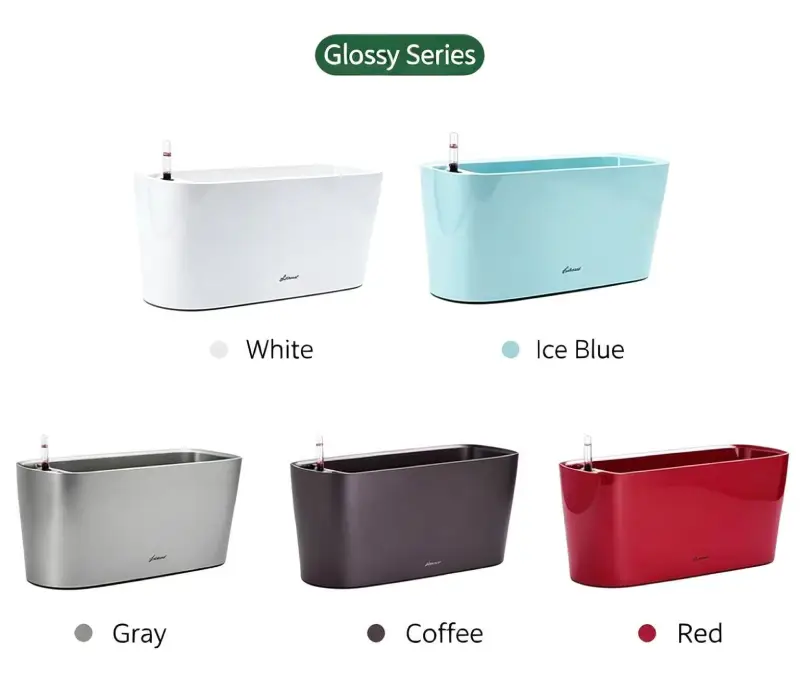
Self-watering pots can be used in a variety of indoor and outdoor environments, including homes, offices, windowsills, balconies, patios and garden spaces. Their convenient watering system makes them a practical choice for everyday plant care, while different sizes, shapes and colors allow them to fit different planting and display needs.
How to Choose the Right Self-Watering Pot
When selecting a self-watering planter, it is useful to consider more than just its appearance.
Size and Plant Requirements
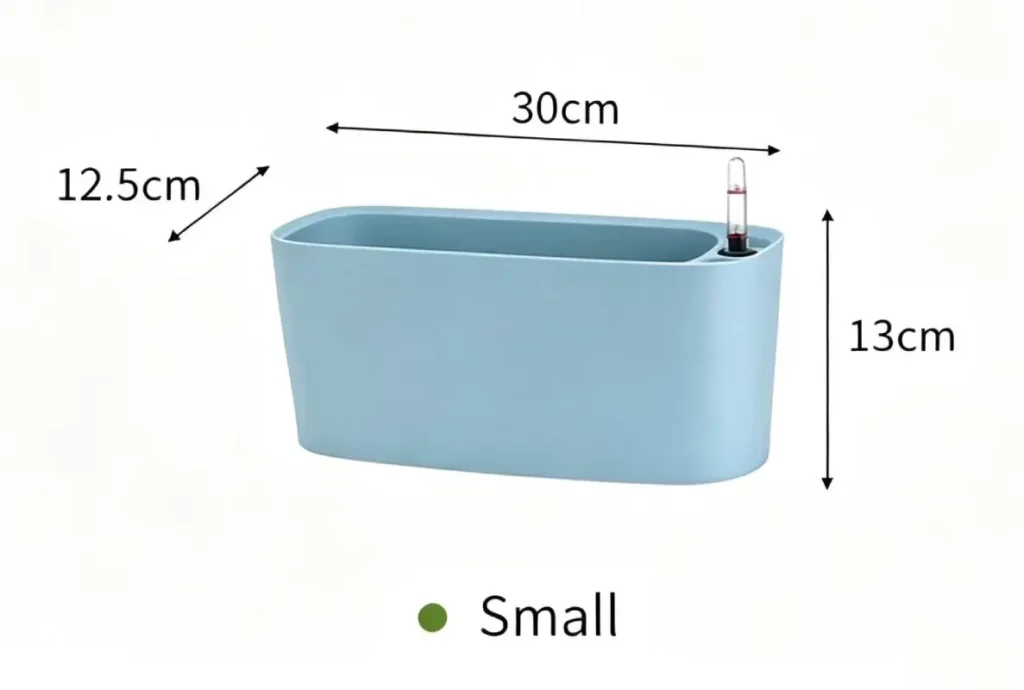
Choose a pot size that matches the plant’s root system and expected growth. A container that is too small can restrict root development, while an oversized container may hold more moisture than certain plants require.
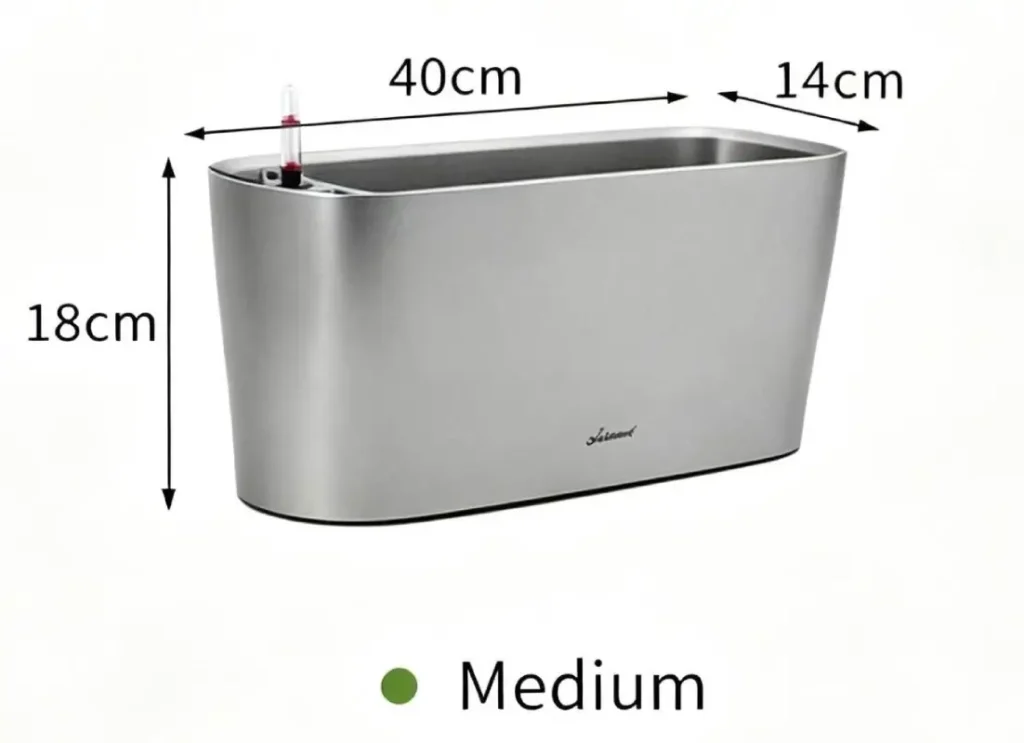
Water Reservoir Capacity
A larger reservoir can provide more water storage, but the ideal capacity depends on the plant, growing environment and planter size.
Material
PP (polypropylene) is one commonly used material for modern planters because it can provide a lightweight and durable construction.
Self-Watering Pots vs. Traditional Plant Pots
For garden centers, plant retailers, wholesalers and distributors, self-watering pots can be a practical addition to a garden product range.
Different planter sizes, shapes, colors and finishes can serve different customer preferences and market requirements. For example, rectangular planters in neutral colors can suit modern indoor plant displays, while brighter colors can be used to create more decorative garden arrangements.
If you are looking for self-watering pots for wholesale or retail distribution, contact us to discuss available models, colors, packaging options, MOQ and pricing.